
Learning the Quran online has become a convenient option for children, adults, beginners, and people who want to improve their recitation from home. Online Quran academies provide flexible schedules, qualified teachers, and different learning programmes to meet individual needs. Many academies also offer a free or low-cost trial lesson so students can experience the teaching method before making a financial commitment. However, once the trial period ends, understanding the actual fees becomes important.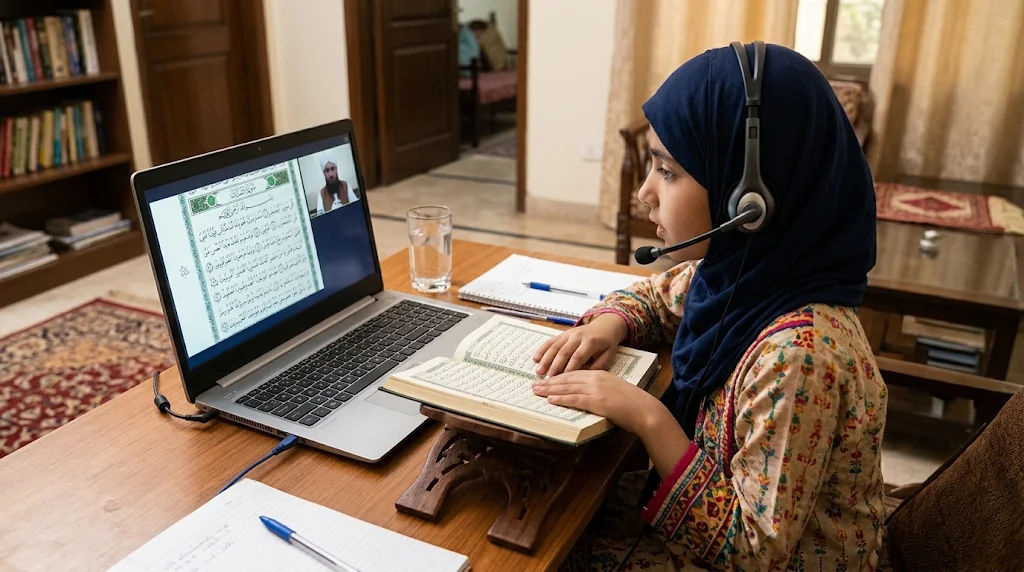
One of the most common questions parents and students ask is how much do online quran classes cost after completing a trial lesson. The answer depends on several factors, including the number of weekly lessons, class duration, teacher qualifications, course type, and the academy's pricing structure. Some programmes are affordable for beginners, while specialised Tajweed and Quran memorisation courses may require higher monthly payments.
Understanding these costs helps families choose a suitable learning programme without exceeding their budgets. This guide explains typical pricing structures, factors affecting fees, payment options, and practical ways to select an online Quran academy that offers good educational value.
Online Quran Class Fees After a Trial
A trial lesson allows students to understand how an online Quran class works before registering for regular sessions. During this lesson, students can meet their teacher, discuss their learning goals, and experience the teaching platform.
After the trial, the academy usually provides a fee structure based on the selected programme.
The price may be calculated weekly, monthly, or according to the total number of lessons. Some academies charge a fixed monthly amount, while others offer different packages depending on class frequency.
It is important to understand that completing a free trial does not automatically mean the remaining classes will have the same price across different academies.
Students should request a clear explanation of the fees before registration.
What Happens After a Free Trial?
Once the trial lesson is complete, the teacher or academy representative may discuss the student's progress and recommend a suitable course.
For example, a beginner may need basic Quran reading lessons, while someone with previous experience might benefit from Tajweed instruction.
The academy may then provide several package options.
These can include:
-
Two lessons per week for students with limited availability.
-
Three lessons per week for regular learning.
-
Five lessons per week for students who prefer frequent practice.
-
Special programmes for Quran memorisation.
-
Individual lessons for personalised instruction.
Each option may have a different monthly fee.
Are Trial Lessons Always Free?
Many online Quran academies provide free introductory lessons. Others charge a small amount for an assessment session or demonstration class.
A free trial usually allows students to evaluate the teacher and learning environment without paying for a complete course.
However, students should confirm whether the trial includes a full lesson or only a short introduction.
They should also ask whether registration charges, learning materials, or platform fees apply after the trial.
How Much Do Online Quran Classes Cost on Average?
The cost of online Quran education varies between academies and countries. Some services offer affordable packages, while others charge more for specialised teaching and additional support.
When considering how much do online quran classes cost, it is helpful to examine common monthly price ranges.
The following figures are illustrative estimates in US dollars rather than verified prices from a particular academy.
|
Learning package |
Estimated monthly cost |
|---|---|
|
Two lessons per week |
$15–$35 |
|
Three lessons per week |
$25–$50 |
|
Five lessons per week |
$40–$80 |
|
Intensive individual lessons |
$60–$120 |
|
Specialised memorisation programmes |
$50–$120 |
Actual prices may fall outside these ranges depending on the teacher's experience, location, class duration, and academy policies.
Monthly Packages
Monthly packages are among the most common payment arrangements.
Students pay a fixed amount and receive an agreed number of lessons throughout the month.
For example, a package might include three weekly sessions of 30 minutes each.
This arrangement makes it easier for families to plan their educational expenses.
Before choosing a monthly package, students should check how missed lessons are handled and whether unused sessions can be rescheduled.
Weekly Payment Options
Some academies allow students to pay weekly instead of committing to a full month.
This arrangement may suit families who want greater payment flexibility.
However, weekly payments are not always cheaper. In some cases, monthly packages provide better value because academies offer discounted rates for longer commitments.
Pay-Per-Lesson Arrangements
Another option is paying separately for each completed class.
This can be useful for students who have changing schedules or want occasional Quran lessons.
However, students should compare the individual lesson price with monthly packages before deciding.
Regular learners may find that a monthly subscription offers a lower overall cost.
Factors That Affect Online Quran Class Prices
Not every online Quran course costs the same amount. Several important factors influence the final price after the trial period.
Understanding these differences makes it easier to compare academies fairly.
Teacher Qualifications and Experience
Teacher experience is one of the most important pricing factors.
A teacher with extensive Quran teaching experience, recognised qualifications, and strong knowledge of Tajweed may charge more than someone who offers basic instruction.
Qualified teachers can help students understand pronunciation, recitation rules, and common reading mistakes.
Their experience may also make lessons more organised and productive.
However, a higher price does not automatically guarantee better teaching.
Students should consider teaching ability, communication skills, patience, and student feedback when evaluating an instructor.
Number of Weekly Lessons
The number of lessons directly affects the monthly fee.
A student attending two sessions per week will generally pay less than someone attending five sessions.
More frequent classes can provide additional opportunities for revision and practice.
However, students should choose a schedule they can maintain comfortably.
A consistent learning routine is usually more useful than selecting an expensive package with too many lessons.
Duration of Each Class
Class duration also influences pricing.
Many online Quran lessons last between 20 and 60 minutes.
Short sessions may work well for young children or beginners who need focused instruction.
Longer sessions may be suitable for students studying advanced Tajweed or memorisation.
When comparing packages, check whether the quoted fee covers 20-minute, 30-minute, or 45-minute lessons.
A package with fewer but longer sessions may offer a different educational experience from one with several shorter lessons.
Individual or Group Classes
Individual classes usually cost more because the teacher focuses on one student throughout the session.
This arrangement provides personalised attention and allows the teacher to adjust lessons according to the student's progress.
Group classes may be more affordable because several students share the teacher's time.
However, individual feedback may be limited in a group environment.
Families should consider the student's learning needs before selecting either option.
Does the Type of Quran Course Change the Price?
Yes. Different Quran programmes require different teaching approaches, preparation, and levels of expertise.
A basic reading course may have a different price from an advanced Tajweed or memorisation programme.
Basic Quran Reading Classes
Basic Quran reading courses are designed for beginners.
Students learn Arabic letters, pronunciation, joining letters, and simple reading patterns.
These lessons are suitable for children and adults who are starting their Quran learning journey.
The programme may also include introductory reading exercises and regular revision.
Because the course focuses on foundational skills, it may be available through relatively affordable packages.
Quran with Tajweed
Tajweed courses teach students how to recite the Quran correctly by understanding the rules of pronunciation and articulation.
Teachers explain subjects such as:
-
Makharij, or the articulation points of Arabic letters.
-
Characteristics of Arabic letters.
-
Rules of noon sakinah and tanween.
-
Rules of meem sakinah.
-
Madd and its different forms.
-
Proper pronunciation during recitation.
Specialised Tajweed instruction may cost more because it requires detailed correction and individual attention.
Students should check whether the selected package includes regular recitation assessments.
Quran Memorisation Classes
Quran memorisation programmes focus on learning and retaining selected portions of the Quran.
Teachers may organise lessons around new memorisation, revision, and regular progress assessments.
The amount of teacher preparation and student supervision can influence the price.
Some academies provide separate memorisation packages, while others include Hifz instruction within their regular programmes.
Students should ask how much time is allocated to new memorisation and revision.
Quran Translation and Understanding
Some online academies offer courses that focus on Quran translation, vocabulary, and basic understanding.
These programmes may be suitable for students who can already read Arabic but want to develop a deeper understanding of the Quran.
Pricing depends on the teacher's qualifications, course structure, and lesson duration.
Additional Charges to Check After the Trial
The advertised monthly price does not always represent the complete cost.
Before registering, students should ask whether additional charges apply.
Registration Fees
Some academies charge a one-time registration fee when a student joins.
Others provide free registration as part of their introductory offer.
It is important to confirm this before making the first payment.
Learning Materials
Most online Quran classes use digital resources, including reading exercises, worksheets, and educational presentations.
Some academies provide these materials without additional charges.
Others may require students to purchase books or printed learning resources separately.
Ask whether all necessary materials are included in the package.
Technology or Platform Charges
Online Quran lessons usually require a stable internet connection and a suitable communication platform.
Some academies use common video-calling applications, while others operate through dedicated learning systems.
Check whether the academy charges extra for accessing its platform.
Students should also consider their own internet expenses when calculating the overall learning budget.
Missed Class and Rescheduling Policies
A missed lesson can affect the value of a monthly package.
Some academies offer replacement classes when students provide advance notice.
Others may have strict attendance policies.
Before registration, ask:
-
Can missed lessons be rescheduled?
-
How much notice is required?
-
Are replacement lessons free?
-
What happens when the teacher is unavailable?
-
Do unused lessons expire at the end of the month?
Clear policies help prevent misunderstandings later.
How to Choose an Affordable Online Quran Academy
Finding an affordable academy involves more than selecting the lowest advertised price.
Students should compare teaching quality, class structure, flexibility, and overall educational value.
Compare Several Academies
After completing a trial lesson, avoid making an immediate decision based only on the first offer.
Compare at least two or three academies if possible.
Look at their monthly packages, lesson durations, teacher qualifications, and additional charges.
This makes it easier to understand whether the offered price is reasonable.
Evaluate the Teacher's Communication Skills
A good Quran teacher should explain lessons clearly and correct mistakes patiently.
This is especially important for beginners who may need additional support with Arabic pronunciation.
During the trial, notice whether the teacher listens carefully, explains difficult subjects, and adjusts the lesson according to the student's ability.
A comfortable learning environment can make regular attendance easier.
Check Class Flexibility
Many students have school, work, family responsibilities, or other commitments.
An academy with flexible scheduling can make Quran learning more manageable.
Ask whether classes are available in the morning, afternoon, or evening.
Also confirm whether changing a regular timetable is possible.
Look for Transparent Pricing
A trustworthy academy should explain its fees clearly.
Students should know exactly what their package includes before making a payment.
Avoid choosing a programme when the academy cannot explain its registration fees, cancellation policy, or payment arrangements.
Transparency is an important part of a positive educational experience.
How to Save Money on Online Quran Classes
Learning the Quran does not necessarily require an expensive educational package.
Families can manage their budgets by making careful decisions.
Select a Suitable Weekly Schedule
Choose the number of lessons according to the student's availability and learning goals.
For example, a beginner may start with three weekly sessions rather than paying for daily instruction immediately.
The schedule can be adjusted later if additional lessons become necessary.
Ask About Family Discounts
Some academies offer discounts when multiple family members register together.
Parents with two or more children should ask whether a family package is available.
This may reduce the total monthly expense.
However, make sure each child receives sufficient teaching attention.
Consider Longer-Term Packages
Certain academies provide discounts for students who pay for several months in advance.
Although these packages may reduce the monthly cost, families should carefully examine the cancellation and refund policies.
It is generally sensible to understand the academy's teaching quality before making a long-term commitment.
Avoid Paying for Unnecessary Features
Some programmes include additional services that may not be essential for every student.
These might include extra assessments, supplementary workshops, or additional learning resources.
Choose features that support the student's actual learning goals.
A simple, well-organised course can provide excellent educational value.
Are Online Quran Classes Worth the Cost?
Online Quran classes can provide several advantages that make their fees worthwhile for many families.
The main benefit is convenience.
Students can learn from home without travelling to a physical academy. This can save transportation expenses and make it easier to fit lessons into a busy schedule.
Another advantage is access to teachers from different locations.
Students are not limited to instructors living in their immediate area. They can compare teaching styles and find someone whose approach suits their learning requirements.
Individual lessons also allow teachers to focus on specific pronunciation problems and learning difficulties.
For parents, online classes can provide a structured way to support their children's Quran education.
However, the quality of the experience depends on the academy, teacher, technology, and student's participation.
Families should evaluate the educational benefits alongside the financial commitment.
Questions to Ask Before Paying After a Trial
The trial lesson is an excellent opportunity to gather important information.
Instead of focusing only on the monthly fee, ask questions that explain exactly what the package offers.
Questions About Pricing
Ask the academy:
-
What is the complete monthly fee after the trial?
-
Is there a registration or admission charge?
-
Are learning materials included?
-
Do you offer discounts for multiple students?
-
Is payment required weekly or monthly?
These questions help identify the actual financial commitment.
Questions About Teaching
It is also important to understand the educational structure.
Ask whether the same teacher will conduct every lesson, how student progress is measured, and whether parents can receive progress updates.
For specialised courses, confirm that the instructor has suitable experience in Tajweed or Quran memorisation.
Questions About Policies
Before paying, request information about cancellations, refunds, missed lessons, and schedule changes.
Written policies are particularly helpful because they provide a clear record of the agreement.
Understanding these details can prevent unexpected expenses.
What Should Parents Consider When Enrolling Children?
Parents should consider more than the monthly cost when choosing an online Quran programme for children.
The teacher should be patient, respectful, and capable of explaining lessons in an age-appropriate way.
Young students often benefit from shorter sessions and regular breaks.
A suitable programme should also include revision so children can practise previously learned material.
Parents should understand how attendance and progress are monitored.
It is also important to check online safety arrangements, including whether lessons take place through an appropriate platform and whether parents can supervise their children's learning environment.
An affordable programme that provides consistent instruction and a supportive teacher can be a practical choice for many families.
Common Mistakes to Avoid When Comparing Quran Class Fees
Students sometimes focus entirely on price and overlook important details.
This can lead to disappointment after registration.
One common mistake is choosing the cheapest academy without checking teacher qualifications or lesson quality.
Another is assuming that every advertised package includes the same number of classes.
Students should also avoid paying for several months without understanding the refund policy.
Ignoring lesson duration is another issue. Two academies may advertise similar monthly prices while providing very different amounts of teaching time.
Finally, do not assume that a free trial guarantees a particular monthly rate.
Always request the complete pricing details before enrolling.
Conclusion
Understanding the cost of online Quran education after a trial lesson helps students and families make informed decisions. Although prices vary between academies, the overall expense generally depends on the number of weekly lessons, teacher experience, class duration, course type, and additional services.
When researching how much do online quran classes cost, students should compare monthly packages instead of relying only on advertised starting prices. They should also consider registration charges, learning materials, missed-class policies, and possible family discounts.
A free trial is an excellent opportunity to evaluate the teaching method, communicate with the instructor, and understand the available programmes. Students should use this opportunity to ask questions about pricing and educational expectations.
The most suitable academy is not necessarily the cheapest or the most expensive. It is the one that offers qualified instruction, clear communication, flexible scheduling, and a reasonable fee structure.
Whether someone wants to learn basic Quran reading, improve Tajweed, memorise selected chapters, or develop better recitation skills, a carefully selected online programme can make learning more accessible.
Ultimately, families should choose a course that matches their educational goals and financial circumstances. With proper research and a clear understanding of the fees after the trial, students can begin their Quran learning journey with greater confidence and a sustainable plan.