
A 5kW solar system is a popular choice for Pakistani households because it can help reduce electricity bills and provide a reliable source of energy during sunny days. However, one of the most common questions homeowners ask before purchasing a solar setup is how many solar panels are required to build a 5kW system. The answer depends mainly on the wattage of the panels, the inverter capacity, available rooftop space, and household electricity requirements.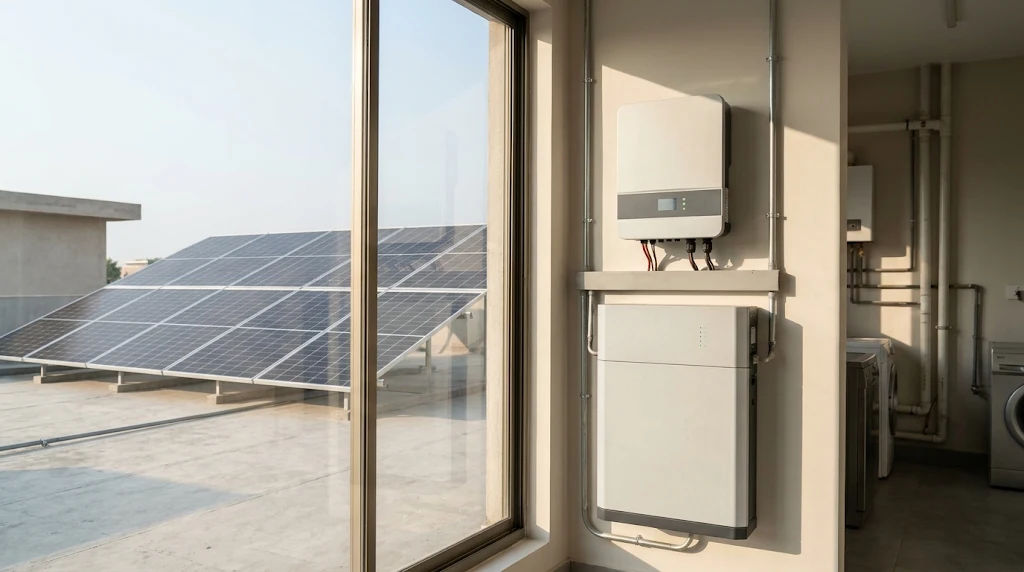
Understanding the number of panels needed is an important part of planning a solar installation. It also helps homeowners estimate installation costs, compare equipment, and make informed decisions. When researching the 5kW solar system price in Pakistan, buyers should consider the total system capacity rather than looking only at the number of panels. A well-designed system combines suitable solar panels, an inverter, mounting structures, electrical protection, and other essential components.
This comprehensive guide explains how many panels are needed for a 5kW solar system, how different panel wattages affect the total number, how much roof space is required, and what factors influence overall performance in Pakistan.
5kW Solar System
A 5kW solar system is an electricity generation setup designed around a system capacity of approximately 5,000 watts. It converts sunlight into electrical energy through photovoltaic panels.
The electricity generated by the panels is supplied to an inverter, which converts direct current (DC) into alternating current (AC). Most household appliances in Pakistan use AC electricity, making the inverter an essential part of the installation.
A 5kW system can support various household appliances, depending on their power consumption and operating hours. These may include:
-
LED lights and ceiling fans.
-
Refrigerators and freezers.
-
Televisions and computers.
-
Washing machines.
-
Water pumps.
-
Selected air conditioners.
-
Other household electrical equipment.
However, the number of appliances that can operate simultaneously depends on inverter capacity, starting currents, sunlight conditions, and electricity consumption.
How Many Solar Panels Are Needed for a 5kW System?
The number of solar panels required depends on the wattage of each individual panel. Modern solar panels are available in different capacities, including 450W, 500W, 550W, and 600W.
The basic calculation is straightforward:
Number of panels = Required solar capacity ÷ Individual panel wattage
For a 5kW system, the required capacity is 5,000 watts.
Here are some examples:
| Solar panel wattage | Number of panels | Total capacity |
|---|---|---|
| 450W | 12 | 5,400W |
| 500W | 10 | 5,000W |
| 550W | 10 | 5,500W |
| 580W | 9 | 5,220W |
| 600W | 9 | 5,400W |
These calculations show that most installations can use approximately 9 to 12 panels, depending on the selected panel wattage.
For example, ten 500W panels provide exactly 5,000 watts of nominal DC capacity. Meanwhile, ten 550W panels provide 5,500 watts, which may be suitable for an appropriately designed 5kW inverter system.
The final configuration should always follow the inverter manufacturer's recommended DC input limits.
Why Panel Wattage Matters
Solar panel wattage determines how much electricity an individual panel can produce under standard testing conditions.
Higher-wattage panels generally allow homeowners to install fewer modules while achieving a similar total capacity. This can be helpful when rooftop space is limited.
Choosing 450W Solar Panels
A 450W panel is a reasonable option for residential installations. However, homeowners need approximately 12 panels to create a system with 5,400W of nominal capacity.
These panels may be suitable when buyers have enough rooftop space and want to compare different manufacturers and product technologies.
Choosing 500W Solar Panels
A 500W panel offers a convenient calculation for a 5kW setup. Ten panels provide exactly 5,000 watts of nominal capacity.
This arrangement is relatively straightforward when selecting compatible equipment. Buyers should still compare panel efficiency, dimensions, warranties, and electrical specifications.
Choosing 550W Solar Panels
A 550W panel is another common option in the Pakistani solar market. Ten panels provide a combined capacity of 5,500 watts.
This arrangement offers additional DC capacity compared with a 5kW panel array. However, homeowners must confirm that the inverter supports the proposed panel configuration.
When comparing the 5kW solar system price in Pakistan, it is important to understand whether the advertised package includes 5,000W of panels or a slightly larger DC array connected to a 5kW inverter.
Choosing 600W Solar Panels
A 600W panel can reduce the total number of modules required. Nine panels provide 5,400 watts of nominal capacity.
However, larger panels may have different dimensions, weights, and electrical characteristics. Their compatibility with the inverter and mounting structure must be checked before installation.
How Much Rooftop Space Is Required?
Rooftop space is another important consideration when planning a 5kW solar installation.
The exact area depends on the physical dimensions of the selected panels, the mounting arrangement, and the distance needed between rows.
For example, if ten solar panels each occupy approximately 2.5 square metres, their combined surface area would be around 25 square metres.
This is approximately 269 square feet of direct panel coverage.
Additional space may be required for:
-
Maintenance access.
-
Mounting structures.
-
Walking pathways.
-
Row spacing.
-
Equipment placement.
-
Avoiding shadows from nearby objects.
In practical installations, homeowners may need approximately 300 to 350 square feet or more, depending on the roof layout and panel dimensions.
A professional installer should inspect the rooftop before recommending a final arrangement.
What Can a 5kW Solar System Run?
A 5kW solar system can operate several household appliances, but its performance depends on sunlight availability and total electricity demand.
It is important to understand that a 5kW rating does not mean the system produces 5,000 watts continuously throughout the day.
Solar production changes according to sunlight intensity, weather, panel temperature, shading, and installation direction.
Household Lighting and Fans
Lighting and fans generally consume less electricity than larger appliances.
A properly designed 5kW setup can support multiple lights and ceiling fans during suitable solar production hours.
Refrigerators and Freezers
Refrigerators are common household appliances that require electricity throughout the day.
A 5kW system can support typical refrigerator loads, provided the overall household consumption remains within the available capacity.
Air Conditioners
Air conditioners consume considerably more electricity than basic household appliances.
A 5kW solar system may support one appropriately sized inverter air conditioner under suitable conditions, but actual performance depends on its rated consumption and other simultaneous loads.
Homeowners should avoid assuming that every 5kW system can operate multiple air conditioners without considering their combined power requirements.
Washing Machines and Water Pumps
Washing machines and water pumps can also operate through a suitable solar installation.
However, their starting power requirements should be checked, particularly when they operate alongside refrigerators, air conditioners, or other heavy appliances.
Factors That Affect Solar Panel Performance in Pakistan
Pakistan receives substantial sunlight in many regions, making solar energy an attractive electricity option. However, several environmental and installation-related factors influence actual electricity production.
Sunlight Availability
Solar panels generate electricity when sunlight reaches their photovoltaic cells.
Cities such as Lahore, Karachi, Islamabad, Multan, and Faisalabad experience different weather conditions throughout the year.
Seasonal changes, cloudy days, and atmospheric conditions can influence daily electricity generation.
High Temperature
Although Pakistan receives plenty of sunlight, high temperatures can reduce solar panel efficiency.
Solar panels are tested under standard conditions, but their actual output may decrease when cell temperatures rise above the standard testing temperature.
Choosing quality panels with suitable temperature coefficients can help improve performance in hot weather.
Dust and Pollution
Dust accumulation is another important issue in Pakistan.
When dust covers the surface of solar panels, less sunlight reaches the photovoltaic cells. This can reduce electricity generation.
Regular inspection and appropriate cleaning help maintain performance. Cleaning should follow the manufacturer's recommendations and avoid harsh materials that may damage the glass.
Panel Direction and Tilt
Solar panels should be installed in a direction and at an angle that provide good sunlight exposure.
In many parts of Pakistan, south-facing installations are commonly considered suitable, but the ideal arrangement depends on the location, roof design, and shading conditions.
A professional installer can recommend an appropriate tilt angle.
Shading
Shadows from trees, buildings, water tanks, and nearby structures can reduce solar production.
Even partial shading may affect the output of connected panels, depending on the system design and inverter technology.
A rooftop assessment helps identify possible shading problems before installation.
Understanding the Main Components of a 5kW Solar System
Solar panels are important, but they are not the only components required for a complete installation.
Solar Panels
Solar panels capture sunlight and convert it into DC electricity.
Buyers should compare efficiency, manufacturer reputation, product warranties, electrical specifications, and product authenticity.
Solar Inverter
The inverter converts DC electricity into AC electricity for household use.
For a 5kW system, homeowners commonly consider a compatible 5kW inverter. However, the inverter's actual AC output, DC input capacity, maximum voltage, and current limits must be checked.
Mounting Structure
Mounting structures hold solar panels securely on the rooftop.
They should be strong enough to support the panel weight and withstand local weather conditions, including strong winds.
Electrical Protection
Proper electrical protection helps reduce the risk of equipment damage and electrical hazards.
Depending on the installation design, the system may require suitable DC and AC protection devices, isolators, circuit breakers, and surge protection.
Proper earthing and wiring are also essential.
Batteries
Batteries are optional in many solar installations.
An on-grid system can operate without batteries by using the electricity grid when solar production is insufficient.
A hybrid or off-grid system may include batteries to provide backup electricity. Battery capacity should be selected according to essential loads and the desired backup duration.
What Is the 5kW Solar System Price in Pakistan?
The 5kW solar system price in Pakistan depends on several factors, including panel technology, inverter brand, installation quality, mounting materials, and whether batteries are included.
A basic on-grid package generally costs less than a hybrid system with battery storage because batteries add considerably to the overall equipment cost.
When comparing quotations, homeowners should examine the complete equipment list rather than selecting a package simply because it has a lower advertised price.
Important cost factors include:
-
Solar panel brand and wattage.
-
Inverter type and manufacturer.
-
Battery capacity, if required.
-
Mounting structure quality.
-
Installation and labour charges.
-
Electrical protection equipment.
-
Cable quality.
-
Transportation and additional materials.
The 5kW solar system price in Pakistan can also vary between cities because transportation, installation services, and local market conditions are different.
It is advisable to request multiple quotations from established solar installers. Each quotation should clearly mention the equipment specifications, warranties, installation charges, and system capacity.
On-Grid, Hybrid, and Off-Grid 5kW Systems
Before purchasing solar equipment, homeowners should understand the differences between the three main system types.
On-Grid Solar System
An on-grid system connects to the electricity grid.
During daylight hours, solar panels supply electricity to the household. Any shortage can be covered by grid electricity, subject to the system arrangement.
Some systems may also allow eligible consumers to export surplus electricity under applicable utility and regulatory arrangements.
However, standard grid-connected inverters generally shut down during a grid outage for safety reasons unless the system has a properly designed backup arrangement.
Hybrid Solar System
A hybrid system combines solar panels, an inverter, batteries, and grid connectivity.
It can provide backup power during outages when properly configured.
The battery stores electricity for later use, making this arrangement useful for households that experience frequent power interruptions.
Its initial investment is generally higher because of the additional battery equipment.
Off-Grid Solar System
An off-grid system operates independently of the electricity grid.
It usually requires sufficient battery storage to support electricity consumption when sunlight is unavailable.
This arrangement may be suitable for locations without reliable grid access, but careful system sizing is necessary.
How to Choose the Right Solar Panels
Selecting the right panels requires more than comparing their wattage.
Homeowners should evaluate the following factors before making a purchase.
Check Product Authenticity
Always purchase panels from a reputable supplier.
Check the manufacturer's product information, serial numbers, labels, and available warranty documentation.
If possible, request verification through the manufacturer's official channels.
Compare Efficiency Ratings
Panel efficiency indicates how effectively a module converts sunlight into electricity.
Higher-efficiency panels can provide more power from a similar surface area, which is useful when rooftop space is limited.
Review Product Warranties
Solar panels generally come with product and performance warranties.
Understand what each warranty covers, how long it lasts, and which company is responsible for handling claims.
Consider Manufacturer Reputation
Choose manufacturers with established quality standards and reliable after-sales support.
Avoid making a decision based entirely on attractive prices or unverified performance claims.
Common Mistakes to Avoid When Installing a 5kW Solar System
Solar installation involves several technical decisions. Avoiding common mistakes can help protect your investment.
Choosing panels without checking inverter compatibility: The panel voltage and current must remain within the inverter's operating limits.
Ignoring rooftop shading: Nearby buildings, trees, and water tanks can reduce electricity generation.
Buying equipment without verification: Unverified products may create problems with performance and warranty claims.
Using poor-quality wiring: Inadequate cables and electrical protection can affect safety and reliability.
Ignoring future electricity needs: Households planning to purchase additional appliances should consider future consumption before selecting system components.
Overlooking installation quality: Even high-quality solar panels may perform poorly when installed incorrectly.
Comparing packages without checking specifications: A cheaper quotation may exclude important electrical protection equipment, mounting materials, or installation services.
Is a 5kW Solar System Suitable for Your Home?
A 5kW solar system may be suitable for a medium-sized household with moderate electricity consumption.
However, the correct system size depends on actual monthly electricity usage rather than the number of rooms in a house.
Homeowners should review their recent electricity bills to understand their average monthly consumption.
They should also identify which appliances consume the most electricity and when those appliances are normally used.
For example, a household that operates air conditioners for several hours every day may require a different arrangement from a household that mainly uses lights, fans, refrigerators, and televisions.
The 5kW solar system price in Pakistan should therefore be evaluated alongside the household's electricity requirements and expected savings.
A professional energy assessment can help determine whether a 5kW setup is sufficient or whether a larger system would be more appropriate.
Maintenance Tips for Long-Term Performance
Solar systems generally require less maintenance than many traditional electricity-generation systems, but regular inspection is still important.
Follow these practical maintenance recommendations:
-
Inspect solar panels regularly for dust, bird droppings, and visible damage.
-
Clean panels according to the manufacturer's instructions.
-
Check inverter displays for warning messages or unusual readings.
-
Arrange professional inspections of electrical connections.
-
Keep the area around panels clear of unnecessary objects.
-
Monitor electricity production to identify unexpected performance changes.
-
Ensure batteries, if installed, are maintained according to their manufacturer's instructions.
Routine maintenance can help identify minor problems before they affect overall system performance.
Conclusion
A 5kW solar system generally requires around 9 to 12 solar panels, depending on the wattage of the selected modules. For example, ten 500W panels provide 5,000 watts, while ten 550W panels provide 5,500 watts of nominal DC capacity. Nine 600W panels can also provide a combined capacity of 5,400 watts.
The right configuration depends on panel specifications, inverter compatibility, rooftop space, household electricity consumption, and installation requirements. Homeowners in Pakistan should also consider environmental conditions such as high temperatures, dust, seasonal sunlight changes, and rooftop shading.
When evaluating the 5kW solar system price in Pakistan, buyers should compare complete system packages rather than focusing exclusively on panel costs. Solar panels, inverters, mounting structures, electrical protection, installation quality, and optional batteries all contribute to the overall investment.
A carefully planned solar installation can help households reduce their dependence on grid electricity and manage long-term energy expenses. Before purchasing equipment, review electricity bills, inspect available rooftop space, compare reputable manufacturers, and obtain professional installation advice.
Ultimately, choosing the correct number of panels is only one part of building an efficient solar system. The best results come from combining suitable equipment, accurate system sizing, safe installation, and regular maintenance.