
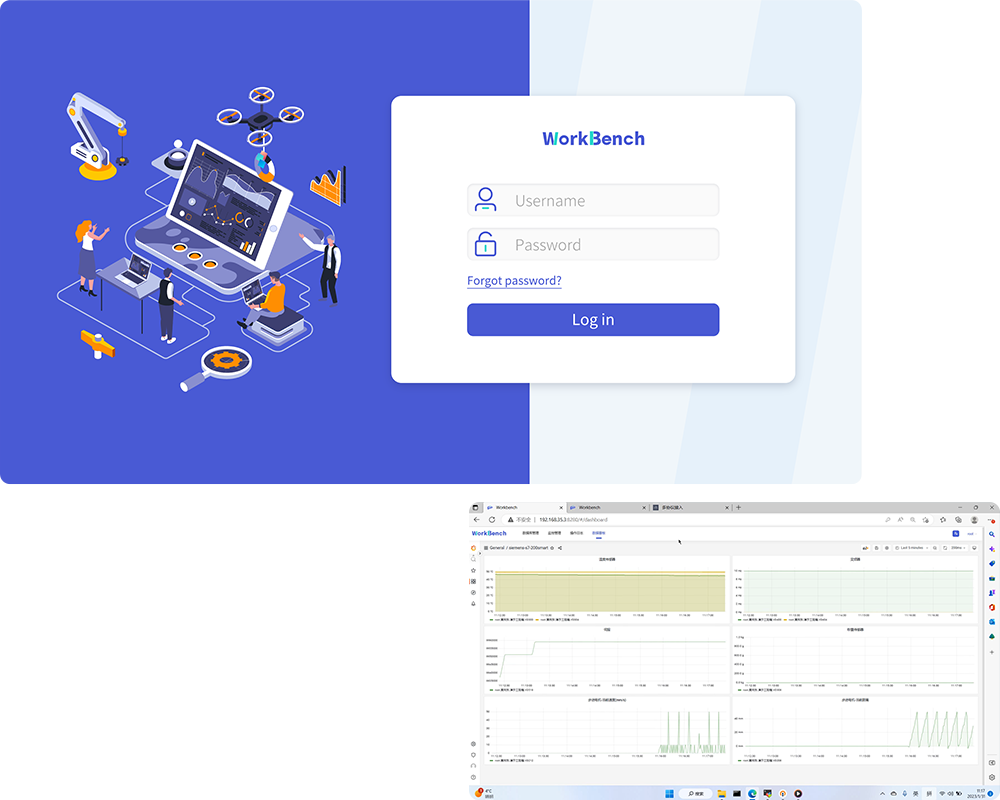
As the Internet of Things(IoT) continues to grow, the for efficient, ascendable, and honest databases to wield massive streams of data has become more indispensable. One of the rising solutions for managing time-series data in IoT applications is IoTDB, a high-performance time-series database designed specifically to address the unique challenges posed by IoT data. When compared to traditional time-series databases like InfluxDB, IoTDB has apace gained traction due to its specialised features and optimization for IoT environments. With the fast expanding upon of wired devices generating vast amounts of data, the public presentation of these databases is a key consideration, and IoTDB’s plan offers distinguishable advantages.
One of the standout features of IoTDB is its telling performance when handling large volumes of time-series data, which is necessity for IoT applications that need real-time data processing and depth psychology. Unlike superior general-purpose databases, IoTDB has been optimized for time-series data, offering high-speed intake, effective compression, and fast question execution. This optimization is particularly world-shaking in IoT systems, where return unremitting streams of detector data, and delays in data processing can lead to substantial inefficiencies or even system failures. The performance of IoTDB in these contexts is often far superior to alternatives like InfluxDB, particularly when dealing with more complex and high-throughput IoT environments.
In terms of scalability, IoTDB excels by offering unseamed naiant grading. As IoT ecosystems spread out, the needs to handle increasingly boastfully datasets without compromising on speed or accuracy. Apache IoTDB shines here, as it is premeditated to scale with efficiency across dispensed systems, ensuring that data can be stored and processed in real time without significant slowdowns. This makes it apotheosis for applications such as ache cities, heavy-duty monitoring, and state of affairs perception, where the data volume can grow exponentially. The ability to surmount horizontally while maintaining fast query responses is a vital vantage for IoTDB when compared to other time-series databases.
Another key vantage of IoTDB lies in its data techniques, which help reduce storehouse requirements without sacrificing data wholeness. IoT often yield vast amounts of data, and storing this data efficiently is requirement to keep off overpowering storehouse systems. IoTDB uses hi-tech compression algorithms to understate the step of time-series data, making it more cost-effective for long-term storage. This is particularly healthful in IoT applications that want consecutive data collection over long periods, such as monitoring state of affairs conditions or trailing industrial .
The ease of integrating and subscribe for standard interfaces also make IoTDB a powerful choice for IoT applications. Many IoT systems rely on time-series databases for aggregation detector data, and IoTDB is studied with in mind. It offers a wide range of connectors and supports industry-standard protocols, sanctionative smooth integration into existing IoT ecosystems. Whether you’re with moderate-scale sensing element networks or boastfully-scale industrial setups, IoTDB s flexibility and public presentation can meet the particular needs of your practical application, allowing developers to focalize on building solutions rather than badgering about limitations.
When comparison IoTDB performance, it becomes that while both are premeditated for time-series data, IoTDB is specifically built for the high demands of IoT environments. InfluxDB, while nonclassical and subject, may not always the same level of public presentation when it comes to grading, depot , and real-time data processing that IoTDB offers. This makes IoTDB an progressively attractive choice for organizations looking to optimize their IoT data direction.
In termination, IoTDB s performance and advantages make it a mighty tool for IoT applications that require high-speed data processing, scalable entrepot, and efficient management of time-series data. Its power to wield large volumes of IoT data with tokenish rotational latency, along with its high-tech data and scalability features, positions it as a superior selection for IoT-driven systems. As the IoT continues to germinate, IoTDB’s capabilities will likely play a indispensable role in ensuring that data can be captured, refined, and analyzed effectively to meet the development demands of wired devices and ache technologies.